
Elbow fittings
When working with pneumatic systems, you know that proper connections are extremely important. Every day we see that small components, such as elbow fittings, can make a big difference in the performance of a system. That’s why we are happy to help you make the right choice. In the text below, we clearly explain what elbow fittings are, what to look for, and how to make your system more reliable.
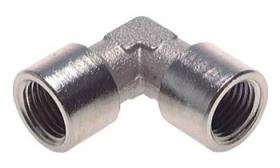
Elbow fittings are connectors that allow you to join pipes at an angle, usually 90 degrees. This makes them indispensable in situations where straight connections simply do not fit, such as in compact machines or installations with limited space.
The main advantage of elbow fittings is flexibility. You can route pipes neatly and professionally without putting unnecessary stress on the system. In addition, you reduce the risk of leaks when using the correct fitting.
We recommend always carefully considering the application, as not every elbow fitting is suitable for every situation. That is why it is important to understand the different types available.
Elbow fittings with threads are widely used in industrial applications. They provide a strong and leak-free connection and are ideal for higher pressure or when reliability is critical.
A major advantage is that they are easy to disassemble, allowing quick maintenance without shutting down the entire system.
This type is perfect for quick installation. You simply push the tube into the fitting and you're done, saving time especially in larger installations.
However, it is important to carefully check the quality of both the tube and the fitting, as poor combinations can lead to leaks.
In complex systems, you may want multiple lines from a single point. Distribution fittings such as T-pieces, Y-pieces, and cross fittings are a smart solution, keeping your installation organized and flexible.
This is often used in production environments where multiple processes run simultaneously.
Always use proper sealing, such as PTFE/Teflon tape for threaded fittings
Ensure pipes are inserted straight in push-in fittings
Regularly check for wear and leaks
Avoid unnecessary stress on the fitting
Following these steps significantly extends the lifespan of your system.
At Pneuparts, quality and reliability come first. We understand your processes must keep running. That’s why we offer not only a wide range of elbow fittings, but also personal advice.
Our specialists think along with you, whether improving an existing system or building a new one, we guide you step by step.
 |  |  |  |  |
NEED HELP ?
For individual technical advice or support, please contact one of our specialists.
We are available from Monday to Friday from 8 am to 5 pm (CET)
 | +31(0)493-763993 |
+31(0)493-763993
ORDERING SERVICE
Order pickup
You can collect your order on working days between 08:00 - 12:00 & 13:00 - 17:00, Florijn 10 b/c Deurne.
Same day delivery
Urgent orders can be delivered by a courier. Express shipments and courier services may be extra charged.
Orders are shipped the same day, if in stock, and delivered to you the next day by UPS.


